
The problem / Evidence
One of the most common injuries in uniform. And one of the least addressed.
We have collected peer-reviewed studies and reporting from researchers and military health authorities in the U.S. and Europe, demonstrating the scale of the problem and its proven impact.
57%
of recruits report foot blisters during basic military training.
U.S. Defense Health Agency · 202355%
higher blister risk for women than men among deployed personnel.
Military Medicine · United States · 201277%
of conscripts investigated after a field exercise had developed contact allergy to the issued blister tape.
Acta Dermato-Venereologica · Sweden · 202350%
of recruits reporting blisters after a field craft exercise.
J R Army Med Corps · British Army · 2015
01 / Studies and official sources
”Use of colophony-containing medical adhesive tapes in the Norwegian Armed Forces has caused strong allergies among our patients, with potential long-term occupational and health consequences.”
Allergic contact dermatitis from medical adhesive tape used for friction blister prevention in the Norwegian Armed Forces: a case series
Nordhammer ABO, Willner J, Svedman C, et al. — NTNU, St Olavs Hospital, Norwegian Armed Forces
Of 26 conscripts investigated after a field exercise, 61% had contact allergy to colophonium, the rosin in the issued blister tape’s adhesive — a sensitisation for life.
Colophonium-related allergic contact dermatitis caused by medical adhesive tape used to prevent skin lesions in soldiers
Hamnerius N, Dahlin J, Bruze M, Nilsson K, Sukakul T, Svedman C — Lund University with the Swedish Armed Forces
Blisters ”can become severe enough to temporarily restrict a person’s physical capacity during training and job duties” and ”present a notable detriment to military readiness.”
Injury Prevention: Blister Prevention
Defense Centers for Public Health – Aberdeen, Injury Prevention Branch
Blisters were the most common injury even in Special Forces selection: 20% of soldiers, 46% of all injuries recorded.
Medical encounters during the United States Army Special Forces Assessment and Selection course
Knapik JJ, Farina EK, Ramirez CB, Pasiakos SM, McClung JP, Lieberman HR
”Despite the high frequency, discomfort, and associated cost there is a paucity of high-quality evidence in support of socks, antiperspirants, or barriers for the prevention of friction blisters.”
Prevention of friction blisters in outdoor pursuits: a systematic review
Worthing RM, Percy RL, Joslin JD
Among 201 skin and soft-tissue infections in infantry trainees, cellulitis was associated with lower-extremity blisters.
Bacterial etiology and risk factors associated with cellulitis and purulent skin abscesses in military trainees
Johnson RC, Ellis MW, Schlett CD, et al. — Uniformed Services University
”Days are lost in training due to foot problems, most commonly blisters, causing a loss of working/training days with a resultant low morale and a financial loss to the army.”
The incidence and prevention of foot problems among male Phase One British Army recruits at an Army Training Regiment
Kelly RA
Blisters were reported to be the main foot problem, and army-issue boots the main cause.
”Foot friction blisters in military personnel lessen a soldier’s mobility, concentration, and critical decision-making skills.” On deployment, 33% had blisters; 11% of those needed medical treatment.
Blisters on the battlefield: the prevalence of and factors associated with foot friction blisters during Operation Iraqi Freedom I
Brennan FH Jr, Jackson CR, Olsen C, Wilson C
The recruits who got foot blisters in basic training went on to more overuse injuries of the knee — the blisters predicted them.
Sock systems to prevent foot blisters and the impact on overuse injuries of the knee joint
Van Tiggelen D, Wickes S, Coorevits P, Dumalin M, Witvrouw E — Belgian Defence
In 2,130 Marine recruits, blisters cost 177 lost training days, 103 light-duty days and 159 clinic visits — and recruits with blisters were 50% more likely to be injured again.
The association of blisters with musculoskeletal injuries in male marine recruits
Bush RA, Brodine SK, Shaffer RA — Naval Health Research Center
On a five-day, 161 km infantry march with a 47 kg load, 36% of the soldiers were injured and blisters were 48% of all injuries. 8% could not finish.
Injuries and risk factors in a 100-mile (161-km) infantry road march
Reynolds KL, White JS, Knapik JJ, Witt CE, Amoroso PJ
69% of recruits got foot blisters. One in four needed medical attention for blisters or cellulitis.
Influence of boot-sock systems on frequency and severity of foot blisters
Knapik JJ, Hamlet MP, Thompson KJ, Jones BH
One 20 km march with 46 kg: 24% of soldiers injured, 44 days of limited duty, blisters the most common complaint.
Injuries associated with strenuous road marching
Knapik J, Reynolds K, Staab J, Vogel JA, Jones B
02 / Press and media
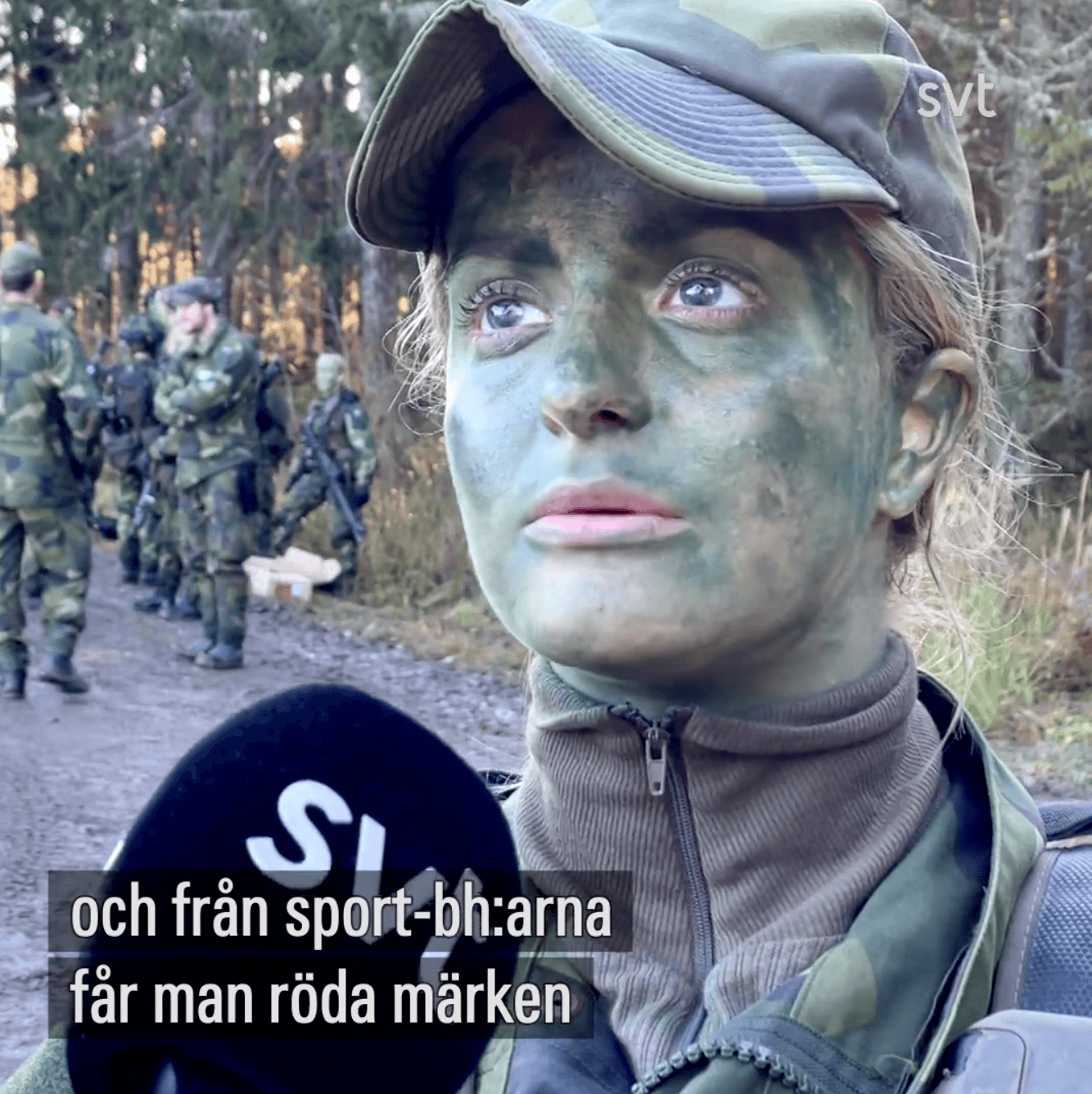
”Many get chafing sores from the briefs, and the sports bras leave red marks and itch a lot.” — Conscript Othilia Sjöberg Jonson, Helicopter Wing
Conscript Othilia: ”Many get chafing sores from the briefs”
Original title: ”Värnpliktiga Othilia: ’Många som får skavsår från trosorna’”.
”Eczema all over the body” — Lund University warns about the blister tape the Armed Forces recommended for ten years.
Warning about blister tape: ”Eczema all over the body”
Original title: ”Varning för skavsårsplåster: ’Eksem över hela kroppen’”. Colophonium in the adhesive can cause lifelong contact allergy; some referred conscripts had eczema over the whole body.
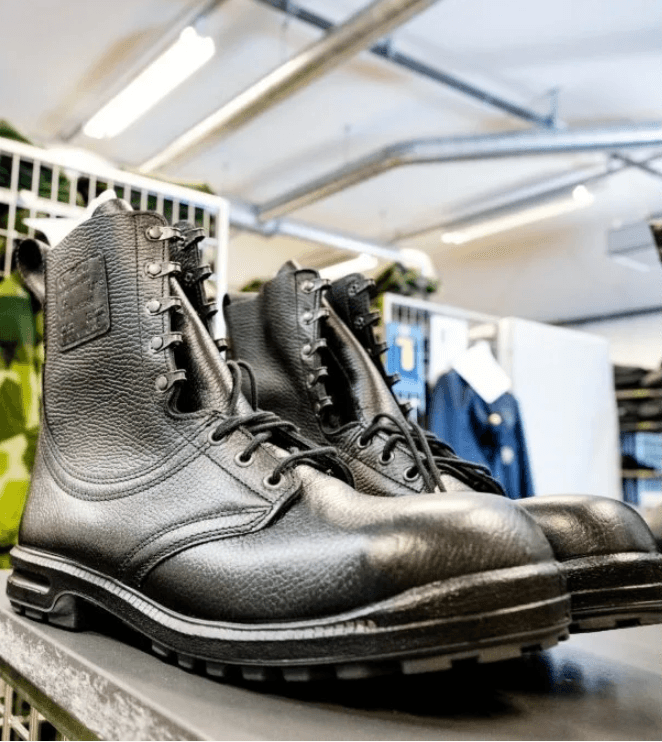
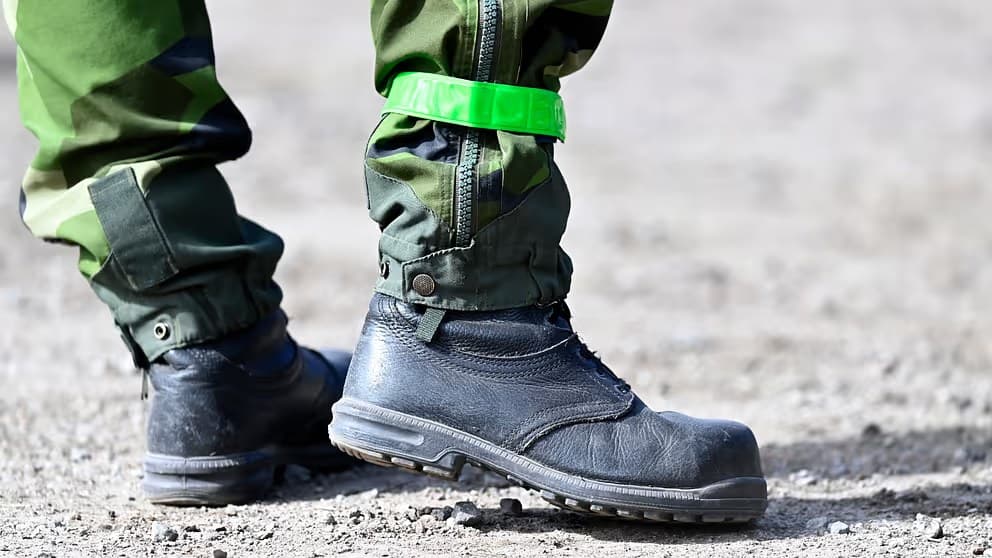
Time-loss injuries in British infantry training cost a median of 24 days of restricted duty each — and loose boots raise friction, hotspots and blister risk.
Keeping boots on the ground
58% of 1,810 infantry recruits at Catterick sustained at least one injury in training; the MoD has funded a five-year, £1.35m University of Bath project on prevention.
The Swedish Armed Forces banned its issued blister tape after conscripts were taken out of service — unable to walk properly or wear shoes because of blisters and sores.
Armed Forces now bans blister tape — conscripts have been taken out of service
Original title: ”Nu förbjuder Försvarsmakten skavsårstejp – värnpliktiga har tagits ur tjänst”. Ban in force from 2 September 2022.
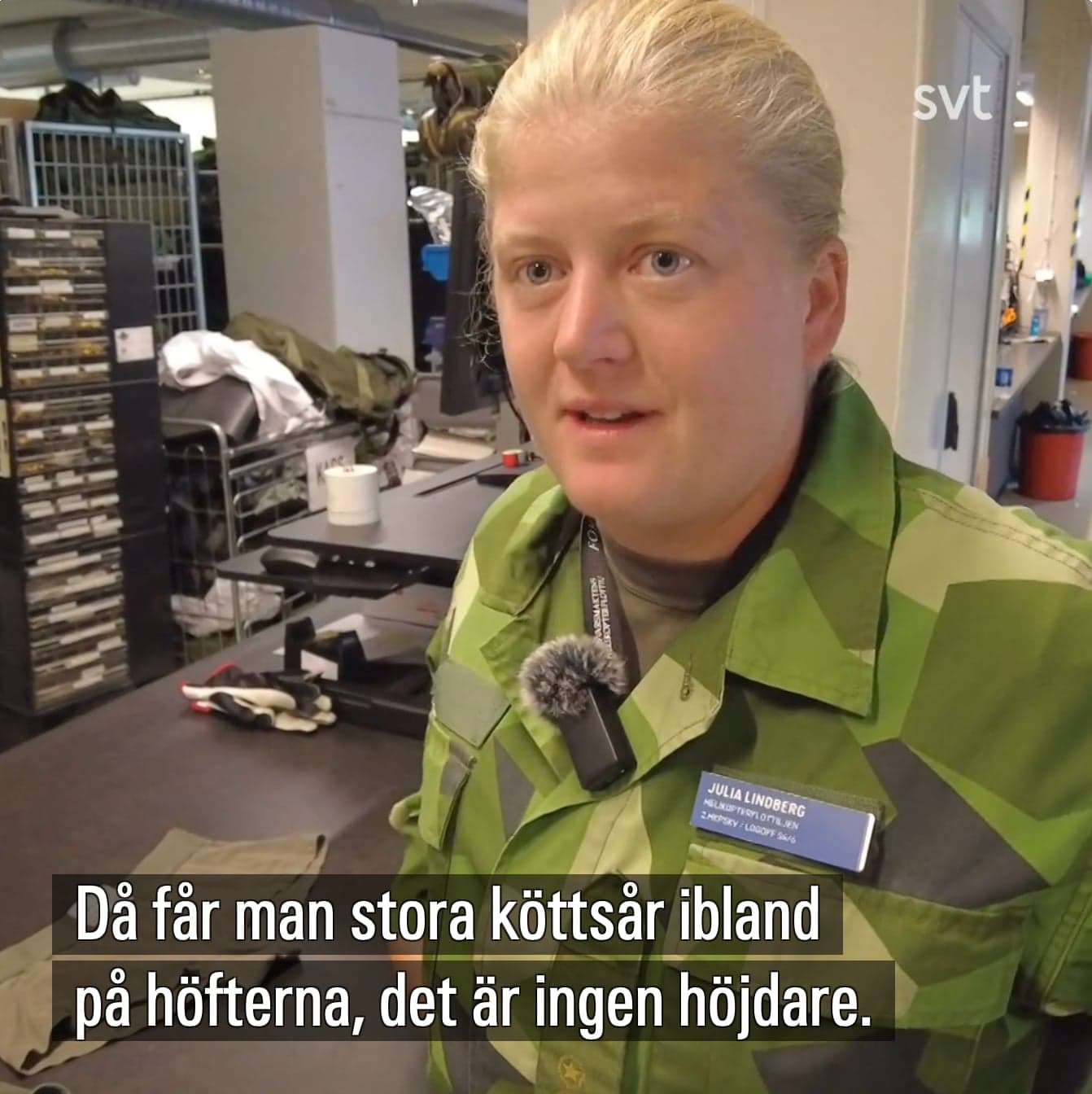
”You get big raw sores on the hips sometimes.” — Specialist officer Julia Lindberg, Helicopter Wing, on the issued briefs: ”you chafe on the hip bones when you carry your equipment.”
Female soldiers reject the Armed Forces’ briefs: ”You get big raw sores”
Original title: ”Kvinnliga soldater underkänner Försvarsmaktens trosor: ’Man får stora köttsår’”.
A year after the first reports, six conscripts at Norrbotten Wing F 21 in Luleå had allergic reactions on their feet from blister tape. Use was stopped again and reported to the Medical Products Agency.
Blister tape continues to cause problems for the Armed Forces
Original title: ”Skavsårstejp fortsätter ställa till med problem för försvaret”. The previous autumn's cases in Arvidsjaur and Halmstad had cost conscripts training: sores on the feet and cancelled physical activities.
”Big blisters where the skin then falls off” — the Armed Forces medical service reported the issued blister tape to the Medical Products Agency after conscripts fell behind in training. About 30 recruits in Halmstad had blisters and sores; most had not healed two weeks after stopping the tape.
Blister tape causes problems for the Armed Forces — sores and big blisters on soldiers’ feet
Original title: ”Skavsårstejp ställer till problem för försvaret – sår och stora blåsor på soldaternas fötter”. Use stopped at both garrisons; the manufacturer halted production to investigate.